
THE NEXT 100 YEARS
Did our wise forebears have any idea just how much incredible progress would occur in the first century of the UCLA College? Their highest hopes would be borne out by the world-changing research, education and service spearheaded by the Bruins who came after. As we find ourselves at the beginning of the UCLA College’s second century, we asked a selection of our leaders those same true-blue-and-gold questions: What’s next? And how will the UCLA College lead the way?
Art by Katie Sipek
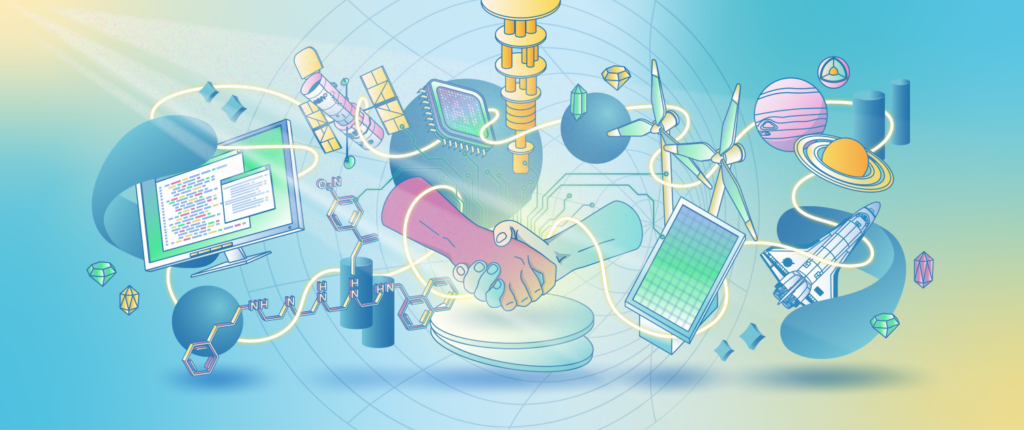
“If I could give one piece of advice to UCLA’s dean of physical sciences in the next century, I’d say, ‘Aim for the stars.’ Literally — that’s what we do at UCLA, so let’s have that 100 years from now. We’ll continue aiming to be number one and to change the world for the better.”

Miguel García-Garibay, senior dean of the UCLA College and dean of physical sciences
Looking toward the next century, I would love for the physical sciences to have become a completely inclusive area of scholarship, where everyone who has the desire and talent to work in science will have the opportunity to do it. I think this is one of our important goals for the next 100 years: that the face of science is the face of our society. When the diversity of people working in science is greater and broader, this will be reflected in the areas of knowledge we will be inquiring and thinking about — things in the world that we’re not even considering now, because we don’t have people working in science who have experienced those aspects of the world.
I would love to develop UCLA as an organization where faculty and students are an integral part of the basic science that will drive our economy. I hope that our society — through our government as well as philanthropic organizations and foundations — will recognize and appreciate the potential UCLA has in terms of development of talent, ideas, concepts, technologies and products.
I hope that, in 100 years, people will look back and see that UCLA played a major role in the development of the technologies of the 21st century, such as quantum computing and the development of space exploration. I’d love for them to see that we played a major role in the development of sustainable energy; that we figured out how to solve many of the challenges of climate change; that we learned how to mitigate wildfires and other climate-related disasters; that people are breathing clean air thanks to the contributions of our scientists.
Looking toward the future of my own field — I am a chemist, and I work in the field of artificial molecular machines — I’m excited about learning how to design molecules that are sufficiently informed or smart enough to accomplish the functions that we instruct them to do. These may include applications in medicine, in communication technology, perhaps in cleaning the environment, trapping and repurposing greenhouse gases, condensing and collecting water in the desert — a lot of basic things that molecular machines, in principle, could do.
If I could give one piece of advice to UCLA’s dean of physical sciences in the next century, I’d say, ‘Aim for the stars.’ Literally — that’s what we do at UCLA, so let’s have that 100 years from now. We’ll continue aiming to be number one and to change the world for the better. And I hope that a century from today, our world sees that UCLA was able to define how higher education and higher education research would become sustainable and well connected to the needs of society.
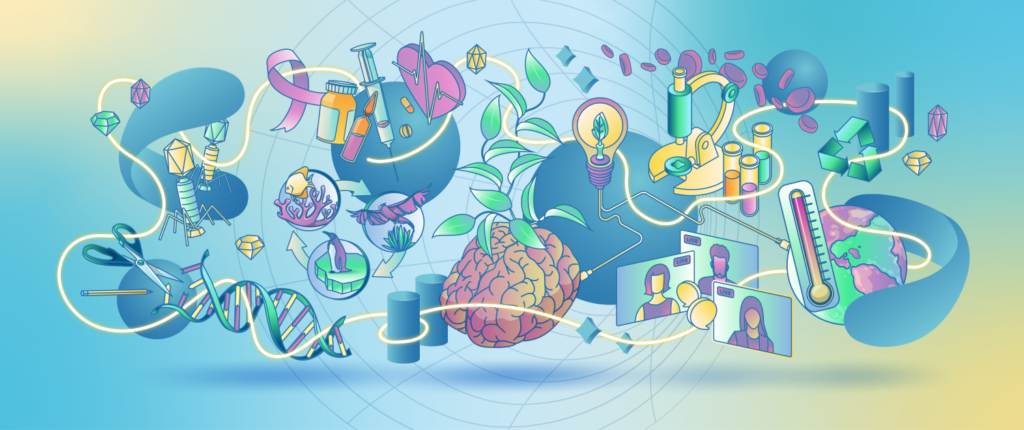
“Fundamental science combined with human ingenuity leads to boundless possibilities. I am humbled by the sheer wonder of it all and excited to see where the human spirit can take us.”

Tracy Johnson, dean of life sciences
We are facing existential challenges that the life sciences are beautifully poised to tackle over the next 100 years — and, of course, we are already addressing them. One of these challenges is to understand the impact of climate change on all forms of life on Earth, from the smallest microbes to human physiology to entire ecosystems. We will have to understand what makes those systems resilient, and it is critical that we understand the role we can play in adapting to and mitigating the impacts of dramatic environmental change. This is going to take the engagement of every life science discipline — including environmental biology, ecology, molecular genetics, psychology, global health, etc. — so that we can be ready to meet the challenges ahead.
I would love to see how technology will continue to help us understand the human brain in every aspect, from the molecular details of gene regulation in neurons to the beautiful and complex set of connections the make the brain work. This opens up the possibility of answering important questions, such as: How does the brain develop? How does the environment affect brain development, function and health? And a big one, particularly with advances in AI: What is the source and nature of human cognition; what does it mean to be human?
Although it might sound clichéd, I dream of us finding a cure to cancer. Cancer is not just one disease, and different types of cancer affect communities differently, so this is a monumental task. However, advances like immunotherapy, which have been game-changing for some specific cancers, give me incredible hope.
If we have learned anything in the last 100 years, it is that scientific breakthroughs come from completely unexpected places. CRISPR, potentially one of the most important advances in medicine in the 21st century, came from studies of bacterial immunity to infection by bacteriophages — viruses that infect bacteria. It is inspiring to see where this “basic science” has taken us.
To capture these unknown possibilities, the dean of life sciences in 100 years will need to create an environment in which people can be creative, collaborative and intellectually unbound. They will have to ensure this space is welcoming to the vast diversity of people who will come at questions in unexpected and exciting ways.
I would advise them to invest in interdisciplinary research. Some of the most amazing science happens on the edges of disciplines. I am sure this will be the case in 100 years. My future counterpart will need to reimagine the spaces, including the physical ones, where we do research so that they foster interdisciplinary research and learning.
I would also advise them to invest in people. In 100 years, the demographics of the country are going to look very different than today. In order for it to advance, everything about the way we do science has to be welcoming, inclusive and tap into the vast talent pool.
Thinking about the future of my field is thrilling. Interdisciplinary boundaries are falling away and opening up areas of research that, a few years ago, would have seemed like science fiction.
I am in a position where I have a front row seat to incredible creativity. I am excited by the seemingly boundless nature of human curiosity and how advances in technology accelerate discovery. I am excited by what the past has told us about how discoveries evolve and can be transformative.
For example, when the double helical form of DNA was described in the 1950s, that was such a breakthrough that it would have been hard to imagine that we’d one day assemble a human genome, or that genomes could one day be sequenced in a matter of hours. It is exciting to remember that it was from the study of CRISPR sequences and their mechanisms of action in bacteria in the early 2000s that we are now reading about FDA approval of a treatment to cure sickle cell, a devastating disease that had been deemed “uncurable.”
Fundamental science combined with human ingenuity leads to boundless possibilities. I am humbled by the sheer wonder of it all and excited to see where the human spirit can take us.
+Explore the UCLA Division of Life Sciences
Bruin Visions for the Future
“I foresee robots and AI will make the impossible possible on the atomic scale, and education will be totally oriented to creative design in a holographic laboratory.”
—James K. Gimzewski, distinguished professor of chemistry
“I imagine that the next 100 years will bring additional university support, a Center for Scholarships and Scholar Enrichment endowment and donors who value the fact that students struggle with college debt. I would also like to see more creative ways to forgive loan debt so that students — undergraduate and graduate alike — are not burdened upon graduation.”
—Angela Deaver Campbell, director of the CSSE
“I think mathematics in the next 100 years will be very human-focused. There is already a huge growing need to understand AI, what it means for humans, what it means about intelligence and what it means in terms of fairness and social justice. I see mathematics playing a key role in answering these human-centered questions.”
—Deanna Needell, professor of mathematics, Dunn Family Endowed Chair in Data Theory and executive director, Institute for Digital Research and Education
“Most analytical methods in marine biogeochemistry will be miniaturized (‘lab on a chip’), and we will be able to do in-situ sequencing of marine eDNA. As a result, we will be able to generate more complex datasets to capture small-scale and short-term changes in the ocean.”
—Tina Treude, professor of marine geomicrobiology
“With the rise of AI and greater sensitivity to human creatureliness, we will deepen our exploration, and hopefully understanding, of religion as a profoundly human phenomenon. New questions will emerge as religious expression, beliefs and practices swiftly move beyond traditional as well as institutional confines. And, indeed, the perennial question, ‘What is religion?’ will continue to animate the field.”
—Carol Bakhos, professor of late antique Judaism and Jewish studies, chair of the Study of Religion program and director of the Center for the Study of Religion at UCLA
“I’m hoping that in the future, every student will get a chance to have a Cluster experience. The integrative way of learning about multiple fields is the best way to satisfy general education requirements while giving students a community to help with the transition to UCLA, so it would be wonderful if we had the capacity for every incoming student, first-year or transfer, to learn in this unique program.”
—Anthony Friscia, director of the UCLA Cluster Program and associate teaching professor of integrative biology and physiology
“I would hope that after 50-plus years of existence, the Academic Advancement Program would be completely endowed by alums and friends of the program. It has transformed the lives of so many students and continues to be the nation’s premier student diversity academic support program.”
—Charles Alexander, associate vice provost for student diversity and director of the Academic Advancement Program
“We envision a future in which reproductive policies and care are based on rigorous science, in which access to reproductive health care is more equitable, and in which the care that people access leverages a deeper understanding of the biology of reproductive cells and systems for better treatments over the life span.”
—Amander Clark, professor of molecular cell and developmental biology as well as director of the Center for Reproductive Science, Health and Education; Hannah Landecker, professor, Institute of Society and Genetics and author of “Culturing Life: How Cells Became Technologies” and co-director of the Center for Reproductive Science, Health and Education
“I hope that in 100 years, the field of cell biology will include not only a detailed understanding of the molecules within a cell (organelles, proteins, RNAs, metabolites), but also a deeper appreciation of the underlying circuitry and regulatory logic that controls their behavior.”
—Hilary Coller, professor of molecular, cell and developmental biology
“I study intimate relationships, and over the past few decades, we have learned a lot about: a) how central the health of our intimate relationships is to individual well-being, and b) how strongly our relationships are affected by economic and stressful conditions outside the home. A century from now, I’d hope that these facts were such common knowledge that policy-makers request a relationships impact report for all new legislation, the same way current legislation requires economic and environmental impact reports. Family values will take on a new meaning when we realize that EVERYTHING WE DO as a society affects our closest and most private relationships.”
—Benjamin Karney, professor of psychology, co-author of “Intimate Relationships”
“Today, in 2023, we know beyond any doubt that true fulfillment of human potential is only possible when people enjoy close relationships, authentic intimacy and sustained social connection — and that people suffer profoundly when they are lonely, isolated, bullied, neglected and abused. In 2123, I hope that love, intimacy and bonding are recognized and exploited for the immeasurable benefits they provide to all people at every stage of life. By organizing our governments, our economies, our health care systems and our communities around this basic principle, more children will be nurtured, more individuals will thrive and loving families of all kinds will flourish.”
—Thomas Bradbury, distinguished professor of psychology, founder of the Marriage and Family Development Laboratory at UCLA, and co-author of “Intimate Relationships”
“I am dreaming of the world where all the knowledge of biology is not merely connected in words and ChatGPT, but through a unified bio-mathematical model that describes how everything — whether molecules, cells or organisms — quantitatively relates to everything else. In the model, you can zoom in to see the details of how the atoms of pharmacologic inhibitors interact with macromolecules, and you can zoom out to see how ecosystems are affected by climate change.
“Each branch of life sciences would use different aspects of this unified model to explore and refine our understanding, and pharma companies could simulate people to do virtual clinical trials of different groups of people to determine who will benefit from a new therapy.”
—Alexander Hoffmann, professor of microbiology, immunology and molecular genetics as well as director of the Institute for Quantitative and Computational Biosciences
“As a friend from a Historically Black College said to me recently about their campus, ‘Every member of our community, from a gardener to the president, feels like they belong and they can succeed.’ This is what I would like to see: that all STEM students, staff and faculty are being equally welcomed and nurtured into an environment that values their lived experiences and their unique ways of knowing.
“Our STEM classrooms can become places where all students and instructors are partners in the learning process, collaborating and co-creating knowledge, deeply listening and learning from each other with empathy and kindness, and recognizing each other’s humanity. We have examples of STEM learning spaces where this is happening, and I am confident that by continuing to critically question our systems and structures, we can achieve true justice in STEM education.”
—Rachel Kennison, associate teaching professor of ecology and evolutionary biology as well as executive director of UCLA’s Center for Education, Innovation and Learning in the Sciences
“Hopefully, in less than 100 years we will be treating genetic diseases more seamlessly. For a patient with a specific disease-causing mutation, we might directly inject gene repair reagents into the blood stream that home to their specific target tissue — whether that’s in blood stem cells, the brain, muscle, heart, lungs, etc. Perhaps this could be done shortly after birth, or even in utero, minimizing any disease-related complications from ever occurring.”
—Donald B. Kohn, distinguished professor of microbiology, immunology and molecular genetics as well as of pediatric hematology and oncology
“In 100 years, I would love to see psychology and neuroscience have a meaningful account of consciousness. We still don’t even know how to ask the right questions, let alone even begin to answer them. In a century, after the ‘Einstein of psychology’ hopefully emerges, they will look back on today’s ‘science of the mind’ as prehistoric.”
—Matthew D. Lieberman, professor of psychology, director of the UCLA Social Cognitive Neuroscience Laboratory and author of “Social: Why Our Brains are Wired to Connect”
“One hundred years from now, I hope we understand how the joint action of objectively measurable proteins, ionic flows and molecules inside the human brain gives rise to a completely subjective viewpoint, the feeling of an ‘I’ that is ‘seeing, hearing, touching, tasting and smelling’ the world. It would have to be an explanation through a neat mechanistic chain of how and why the way matter is arranged in the human brain results in a subjective feeling of ‘being,’ which each one of us possesses, but the way matter is arranged in, say, a rock does not.”
—Martin Monti, professor of psychology and of neurosurgery in the Brain Injury Research Center

“It’s an honor to be the dean of humanities, a field which was integral to UCLA’s founding, and will be integral to its mission and stature in the coming decades.”

Alexandra Minna Stern, dean of humanities
In 100 years, humanities still will be at the core of liberal arts, providing training and inspiration in the time-honored areas of literature, languages and philosophy. Humanities also will be nimble and adaptable, informing critical approaches to emergent issues affecting humanity, likely related to technology, ethics and environment.
My advice to whomever is the dean of humanities 100 years from now would be to advocate proudly for the humanities, as quintessential and foundational to academic inquiry and higher education. Continue to cultivate future humanists, be they undergrads, grads, faculty or community partners.
When I think about the future of this field, I am inspired by opportunities to underscore how humanities prepares students for a wide range of careers, imparting a skill set that includes writing, critical thinking and multilingualism. At UCLA, I am excited by the interdisciplinary initiatives that we are undertaking, which can enliven humanities disciplines and build bridges to other disciplines across campus.
It’s an honor to be the dean of humanities, a field which was integral to UCLA’s founding, and will be integral to its mission and stature in the coming decades.
+Explore the UCLA Division of Humanities

“College is a transformational experience for students, and UCLA is lucky to have a role in shaping tomorrow’s brilliant minds.”

Adriana Galván, dean of undergraduate education
Looking ahead to the next century of the UCLA College, I’d like to see a greater focus on interdisciplinary education, teaching practices and methods to significantly help prepare our students for an intersectional world. Providing students with the opportunity to think critically, incorporate diverse perspectives into their own thinking, engage civically with their local and global communities, and practice communication skills is what institutions of higher education should strive to do.
My advice to whomever is the dean of undergraduate education in 100 years is to actively listen to students because they know best what they need — take time to listen to the dynamic nature of learning and teaching and the changing academic needs that students have.
When I think about the future, I’m excited to see the energy around modernizing general education in a way that advances critical thinking, practices inclusive pedagogy and promotes intersectional and interdisciplinary scholarship.
College is a transformational experience for students, and UCLA is lucky to have a role in shaping tomorrow’s brilliant minds.
+Explore the UCLA Division of Undergraduate Education
Bruin Visions for the Future
“Computational chemistry — the simulation and prediction of chemical reactions, drugs, etc. — was born only 70 years ago, and computer power has accelerated by about a trillion-fold since then. I cannot imagine what will be possible when computers are another trillion-fold more powerful, which will surely happen in less than 100 years!”
—Kendall Houk, distinguished research professor of chemistry
“We hope that the next 100 years of undergraduate research at UCLA will bring more: more research opportunities, more mentorship, more scholarships for our students, more research, more knowledge, more discovery! Every day the Undergraduate Research Centers work to make undergraduate research more accessible at UCLA, and we hope that in 100 years (or even better, much sooner), every undergraduate at UCLA who wants to do research will have the opportunity to do so!”
—Jacquelyn Ardam, director, URC – Humanities, Arts and Social Sciences
—Tama Hasson, assistant dean for undergraduate research and director, URC – Sciences
“In 100 years, the cost and time required to sequence DNA will be orders of magnitude cheaper and shorter. Nanoscale real-time DNA sequencing will be ubiquitous and constant; coupled with incredible advances in artificial intelligence, it will provide unprecedented insight into our health and environment, allowing humans to live long and healthy lives in an ecosystem replete with biodiversity.”
—Matteo Pellegrini, professor of molecular, cell and developmental biology and director of the UCLA QCBio Collaboratory
“I don’t think 100 years ago my field of neuroscience had any clue how complex and intricately gorgeous our nervous system was. They certainly could not have envisioned the tools we now have at our disposal to study the brain, peripheral nervous system and enteric nervous system. In 100 more years, I hope we’ll have learned that it is the complex interplay, the integration of our anatomical connections, which genes we’ve turned in or silenced in which cells, which chemicals are present, the history of activity, and how everything dynamically interacts that gives us agency.
“But what I really hope is that we have all learned how to get a decent night’s sleep for our development, memories, emotions and daily repair so that we can be better able to learn from each other, tolerate each other, change our minds about prejudices we may have learned and be able to enjoy our unique selves with humor and mutual respect — even adoration. That we will have learned how to rehabilitate people who fell victim to child abuse or trauma or drug addiction, so that we can all learn a better way to be in this world. And I want us to be able to fully understand the origins of mental illnesses so they can be treated and these members of our community can be restored to us.”
—Gina Poe, professor of integrative biology and physiology and co-director, COMPASS Life Sciences
“Human diseases will be treated by modifying the DNA or RNA with nucleic editing tools.”
—Carla Koehler, professor of biochemistry
[UCLA SETI hat]
“We will find evidence that life exists on other, distant worlds. And maybe, just maybe, we will find evidence that other civilizations exist. That would be out of this world!”
[Planetary science hat]
“There will be hotels on the moon, GPS satellites around Mars, mining operations on asteroids, submarines in Europa’s ocean and drones on Titan.”
—Jean-Luc Margot, professor of Earth, planetary, and space sciences and professor of physics and astronomy
“In astronomy and astrophysics, each century has transformed our understanding of our place in the universe, moving from a view centered on the Earth to one centered on the sun and, a century ago, to one centered and not extending beyond our own Milky Way galaxy. Today, we understand the limited scale that our galaxy represents, but are confounded by our ability to define the contents and forces that drive the universe. With our understanding that mass and energy are equivalent, roughly 75% of our mass-energy budget is beyond our laws of physics. Our everyday experience is limited to 4% of this budget. If history repeats itself, we are bound to make the next leap in our understanding of our cosmological context in the coming century.”
—Andrea Ghez, Lauren B. Leichtman and Arthur E. Levine Professor of Astrophysics and director of the UCLA Galactic Center Group
“Looking toward the future of the Fiat Lux Seminar Program at UCLA over the next 100 years, I imagine that the Fiat Lux seminars will continue making our large university feel small. The need for all members of the UCLA Bruin community to feel they belong and to connect with each other will remain vital. The faculty-led Fiat Lux Program, which is versatile and nimble, will be called upon by the UCLA community to create intimate space for dialogue on topics of importance and to process and reflect on local, national and global events and phenomenon. As a UCLA cornerstone undergraduate program that promotes excellence and innovation, Fiat Lux seminars will stay constant in upholding its motto of ‘Let there be light.’”
— Pia Palomo, academic coordinator of the Fiat Lux Seminar Program
“In the field of heritage science, I imagine the development of novel technologies and methods that could provide a more complete chemical and physical characterization of cultural heritage items, allowing for the investigation of both inner and outer layers without the need for sampling. I imagine the common use of big data analyses and artificial intelligence to solve complex cross-disciplinary queries, and the creation of more cost-accessible technologies.
“My vision extends to a more effective integration between the physical sciences, humanities, social sciences and traditional knowledge, with active community involvement in scientific research. Finally, I imagine the development of more sustainable materials and methods for the conservation of cultural heritage, in harmony with the environment and aligned with the needs and realities of local communities and stakeholders.”
—Thiago Puglieri, assistant professor of technical studies, conservation science and Latin American art history
“In 100 years, I’d like to see a science workforce that is as diverse as our country, where no active or aspiring scientist feels isolated because of their race, ethnicity, gender, LGBTQ+ status or any other identity that would contribute to an individual feeling marginalized in science. I’d like to see universities truly value teaching and supporting the success of all students, at a level equal to their value of research.
“Within marine science, I hope that our science advances to the point where we can counter the impacts of climate change and ocean acidification, such that ocean ecosystems are sustainable and continue to provide humanity with the critical economic and cultural resources and services on which we rely. Ideally, neither of these goals will take 100 years to achieve, and I will see them in my lifetime.”
—Paul Barber, professor of ecology and evolutionary biology and director of the Program for Excellence in Education and Research in the Sciences
“As a behavioral ecologist and a conservation scientist, I hope that our collective efforts save the biodiversity upon which we all depend. I’m hoping that the revolutions in big data and new insights into the mechanisms underlying behavioral diversity will permit us to better predict behavior and behavioral diversity. To date, we can explain the past, but I hope in 100 years we’ll be able to better explain the future!”
—Daniel T. Blumstein, professor of ecology and evolutionary biology, Institute of the Environment and Sustainability and author of “The Nature of Fear: Survival Lessons from the Wild”
“In 100 years, I would like us to have the ability to predict cell fate before it happens: to predict what a cell will do in response to any stimulus or drug. Will it move, die, or divide? To accomplish this, we will need an intricate understanding of the biochemical signaling networks that mechanistically control cell fate, and be able to predict them too.”
—Mehdi Bouhaddou, assistant professor of microbiology, immunology and molecular genetics
“In 100 years, I would like to see my field of neuroscience truly become global. I would like to see pivotal contributions from around the world and across all cultural and socioeconomic spectra. My only other hope is that it doesn’t take 100 years to accomplish.”
—Ketema Paul, professor of integrative biology and physiology

“What inspires me the most as our division looks to the future is how relevant and courageous our professors and their work are — they are tackling some of the most vexing, difficult problems humanity has ever confronted.”
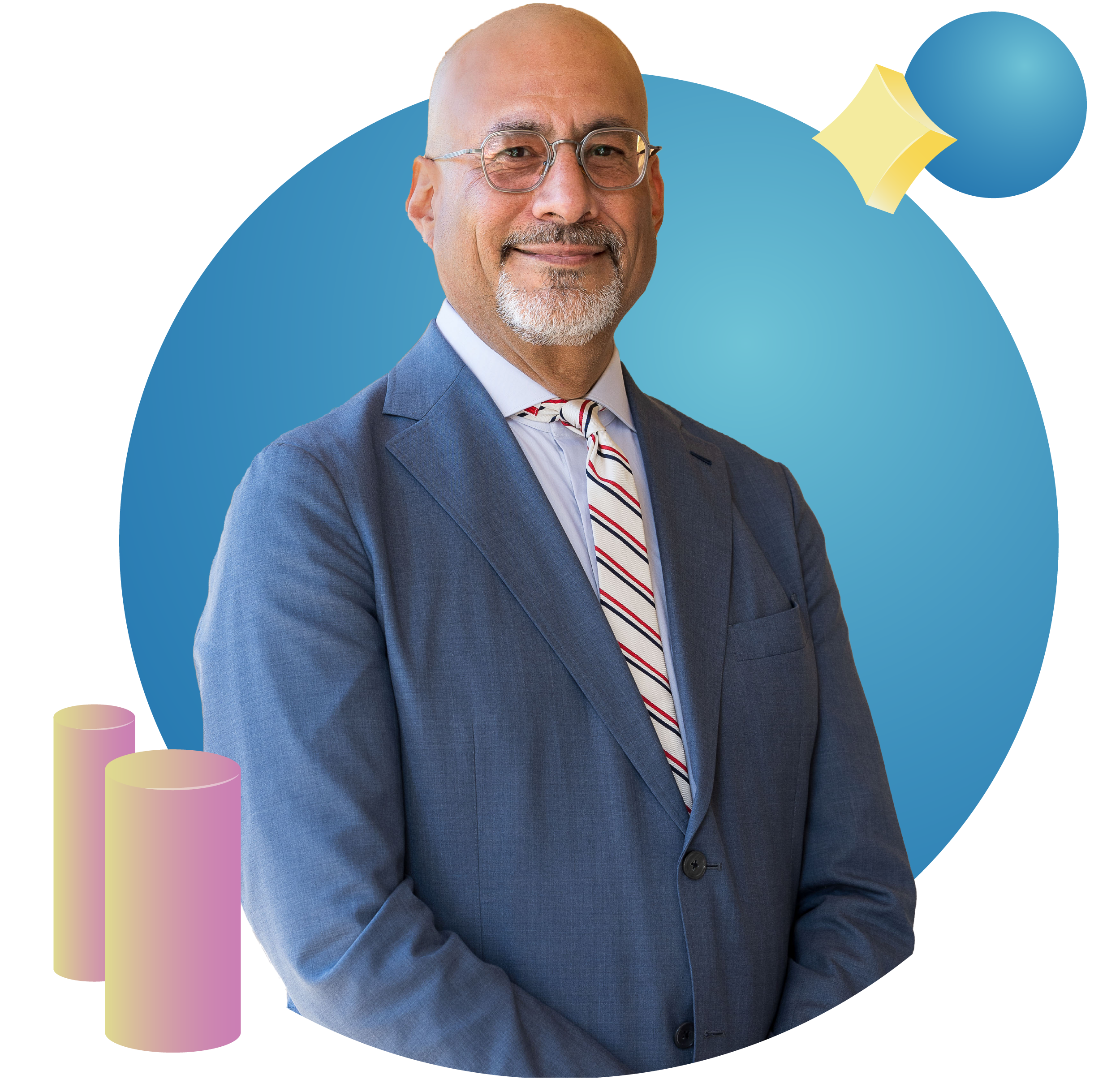
Abel Valenzuela, interim dean of social sciences
Over the next 100 years of social sciences, I’d like to see even more integration as we tackle key issues. We’re the largest academic division at UCLA, which means that we already have some interesting existing relationships that span disciplines, but we need to expand further. We need to be speaking with engineers, hydrologists, folks in the medical sciences and public health, astronomy and beyond — on the issue of climate change, for example, there is immeasurable value in us tackling it through multiple lenses.
Think about what we could accomplish with even more of a reduction in siloed thinking and even more of an increase in creative pathways among disciplines that become seamless and purposeful. If we all work together, we’re nimbler and better equipped to respond to changes in science and pushing knowledge forward. After all, progress occurs incrementally — we’ll discover something, analyze it, think and write about it, and then implementation begins. Research and impact don’t always happen quickly, but there are ways we can speed things up with collaboration.
All of this can really be driven by the social sciences, too. We’re already doing a good job of it, but I know we can do it even better.
Something else I’d like to see over the next century is the division of social sciences on more solid financial footing. Because of how science is undertaken in the U.S., typically areas like physical and life sciences have more infrastructure to bring in funding. The humanities and social sciences don’t always have the same, but what we contribute is equally crucial. Think about the social sciences: we are pushing the frontier of how we interact in society and how we deal with conflict, social justice and civil discord. These are of the utmost importance to humanity’s existence. The more resources for social sciences and humanities, the more we can push what we do forward.
Being a successful dean, whether that’s today or 100 years from now or 100 years in the past, revolves around uniting people with disparate ideas and expertise. When I see these remarkably intelligent folks engaging at a high level of problem-solving, conversing, philosophizing, debating and then problem-solving again, it makes me smile, because that’s what we should be doing — not only on campus, but in every aspect of our lives: working collectively with different minds and expertise to move everything forward.
This is something that’s built into our DNA at UCLA and in our social sciences faculty. We’re trying to create a language that’s related to impact and engagement, that is democracy-forward, and we’re doing it well. What I hope is the future of social sciences at UCLA and everywhere is a focus on impact in the sense of coming back to the Enlightenment. We undertake research for more than just discovery, but to change, improve and even save people’s lives, and I hope that remains front and center over the next century.
What inspires me the most as our division looks to the future is how relevant and courageous our professors and their work are — they are tackling some of the most vexing, difficult problems humanity has ever confronted. And that includes not being afraid to challenge existing norms, whether that’s related to gender, race, violence, wars, hot spots all over the world. Our social science colleagues are not afraid to talk about it, do the in-person research, collect the data and increase what we know about conflict and, more importantly, how we can diminish it for the greater good. There’s something really important about social scientists tackling these enormous contemporary issues — the field’s work and impact has never been more important.
+Explore the UCLA Division of Social Sciences
Bruin Visions for the Future
“I got my Ph.D. about half a century ago in the field of stellar structure and dynamics. The sun is a star and has been a subject of my studies throughout my career, from the deficit of neutrinos from the solar core to the complex magnetic fields and velocities on the surface. The combination of magnetic fields, convection and rotation creates a daunting physical situation that is not well understood, in spite of the application of computing power that has grown immensely over the half-century of my studies.
“Tracking of sunspots over several centuries has revealed the sun’s 11-year magnetic cycle. The cycle is not steady and has gone through decades-long periods where spots ceased to appear. The launching of spacecraft carrying sophisticated instruments that observe the sun nearly continuously has considerably enhanced our ability to probe solar phenomena. The detail now available promises over the coming decades that we will uncover new ways that the complex solar plasma produces the solar cycle.”
—Roger Ulrich, professor emeritus of astronomy and physics
“In space science, we foresee an incredible and unprecedented move of technology into the space environment, with tens of thousands of new satellites being launched over the next few decades. It is hardly possible to imagine what opportunities this technology will enable, just like it was hard to imagine companies like YouTube and Amazon when the internet was first being developed. One thing is certain: we will be far more closely linked to the near-Earth’s space environment than ever before in the history of humankind, and will need to understand the changing moods of the sun and space weather.”
—Jacob Bortnik, professor of space physics, department chair of atmospheric and oceanic sciences and faculty director of the UCLA SPACE Institute
“As someone who works across multiple disciplines — connecting biology and anthropology to history and climate science — my hope is that a serious engagement across methods and subject areas becomes commonplace.”
—Bharat Venkat, associate professor of history and anthropology
“Just like how weather forecasts have changed the way we live, the science of climate change is already shaping and will continue to have a significant impact on how we handle global challenges in the next 100 years.”
—Gang Chen, professor of atmospheric and oceanic sciences
“The future looks great for statisticians! Statisticians answer the question: How do we learn from data? Our subject is data. In some sense, data will evolve a lot like electricity did. At first it is almost magical, then scientific, then useful and finally just there. As data evolves along this path over the next hundred years, so will the discipline of statistics. I’m looking forward to the ride!”
—Mark Handcock, distinguished professor of statistics and data science
“The next 100 years will see hands-on investigations in geology expand from Earth to other planets. As we send humans back to the moon and on to Mars, the new opportunities to apply new technology to the study of other planets and moons will rapidly expand our knowledge and presence in the solar system.”
—Mackenzie Day, assistant professor of Earth, planetary, and space sciences
“How we age may change drastically over the next few generations. I hope that in the next 100 years, we will enhance the aging process by understanding how people can age well, such that people will not simply live longer biologically, but also better psychologically. Perhaps science and technology will improve memory and mobility and provide access to important social connections in older age. Alzheimer’s disease and other forms of dementia could be delayed and even prevented with innovative breakthroughs. Older age could be reinvented so that people can remain independent and connected, and it could be something to look forward to.”
—Alan Castel, professor of psychology and author of “Better with Age: The Psychology of Successful Aging”
“In 100 years, I would like to see a full appreciation of plant species’ diversity in structure and function, from the cell to whole plant scale, and its influence on our ecosystems, on the climate system and on human health. By then, I hope technology advances to the point that we can see (and measure) cell- and leaf-level processes such as photosynthesis and transpiration in real time with our own eyes — aided by, say, specialized virtual reality goggles — and that we can use this information both to anticipate and prevent plant stress in cities, gardens and wild spaces, and to design new plant varieties of untold beauty and nutrition, tolerant of climate stresses. I hope by then, our politicians, city planners and educators will be routinely consulting with plant ecologists and physiologists for input in designing sustainable spaces, optimized for joyful human interactions with nature — and with conservative use of natural resources. It’s exciting to think of all the discoveries we’ll have to make to realize these optimistic botanical visions!”
—Lawren Sack, professor of ecology and evolutionary biology
“I imagine the Center for Scholarships and Scholar Enrichment will have grown through endowment to the point that it can show all UCLA students how pursuing the scholarship process not only enriches their UCLA experiences greatly, but also helps them find their futures.”
—Mac Harris, student affairs officer of the CSSE
“In 100 years, I would like the science in our field to have contributed to violence prevention to the extent that very few people would be exposed to child maltreatment, intimate partner violence or traumatic or stressful events. When these things do occur, I would like everyone to have simple and affordable access to effective and tailored early interventions to reduce the time that people suffer needlessly.”
—Lauren Ng, professor of psychology